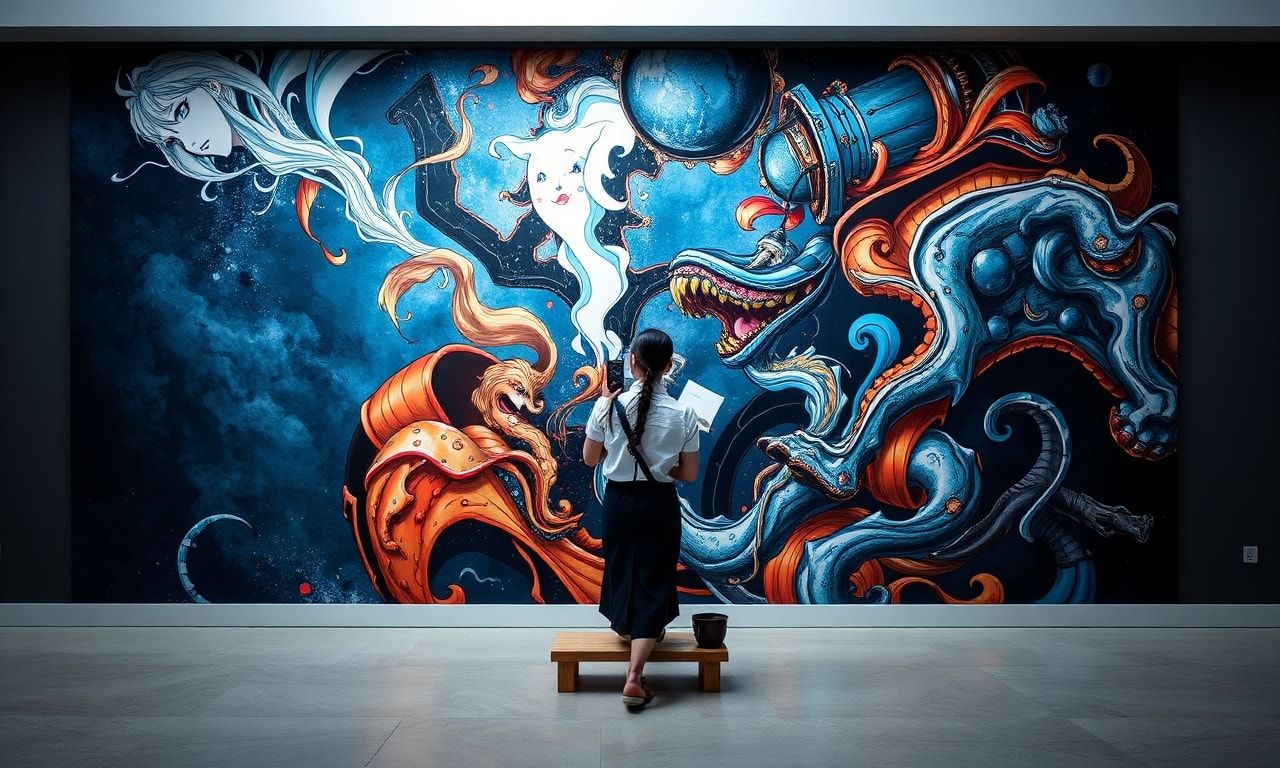
The Artistic Evolution of Anime
Anime, a term derived from the English ‘animation,’ has transcended its origins as a mere form of entertainment to become a significant cultural and artistic phenomenon. Originating in Japan, anime has captivated audiences worldwide with its unique storytelling, vibrant visuals, and deep emotional resonance. The artistry involved in anime production is a testament to the creativity and technical skill of its creators, who blend traditional and digital techniques to create visually stunning masterpieces.
The Influence of Traditional Art on Anime
The roots of anime can be traced back to traditional Japanese art forms, such as ukiyo-e woodblock prints and manga (Japanese comics). These art forms have significantly influenced the visual style and narrative techniques of anime. For instance, the dynamic compositions and expressive characters in anime are reminiscent of the ukiyo-e prints by artists like Hokusai and Hiroshige. Similarly, the sequential storytelling and detailed artwork in manga have laid the foundation for the intricate plots and character development seen in anime.
The Role of Technology in Anime Artistry
Advancements in technology have revolutionized the way anime is created, enabling artists to push the boundaries of visual storytelling. Digital tools and software have streamlined the animation process, allowing for more detailed and fluid animations. Techniques such as 3D modeling and computer-generated imagery (CGI) have been integrated into traditional hand-drawn animation, creating a hybrid style that is both innovative and visually striking. This fusion of traditional and digital artistry has elevated anime to new heights, attracting a global audience and inspiring a new generation of artists.
Anime as a Cultural Export
Anime has become a powerful cultural export, transcending linguistic and cultural barriers to reach a diverse international audience. Its universal themes of love, friendship, and perseverance resonate with viewers worldwide, fostering a sense of connection and shared humanity. The global popularity of anime has also led to the emergence of a thriving industry, encompassing merchandise, conventions, and even themed travel experiences. This cultural exchange has not only enriched the lives of fans but has also provided a platform for artists to showcase their talent and creativity on a global stage.
The Future of Anime Art
As we look ahead to the upcoming anime series to watch in 2026, the future of anime art appears bright and promising. Emerging technologies such as virtual reality (VR) and augmented reality (AR) are poised to revolutionize the way anime is experienced, offering immersive and interactive viewing experiences. Additionally, the increasing diversity of voices and perspectives in anime is broadening its appeal and fostering a more inclusive and representative art form. With its rich artistic heritage and continuous innovation, anime is set to remain a vibrant and influential force in the world of visual arts.
Notable Anime Artists and Their Contributions
The world of anime is filled with talented artists who have made significant contributions to its evolution. Here are a few notable figures:
- Hayao Miyazaki: Co-founder of Studio Ghibli, Miyazaki is renowned for his visually stunning and emotionally resonant films, such as ‘Spirited Away’ and ‘My Neighbor Totoro.’ His intricate artwork and imaginative storytelling have earned him international acclaim and numerous awards.
- Makoto Shinkai: Known for his visually breathtaking films like ‘Your Name’ and ‘Weathering With You,’ Shinkai’s work is characterized by its detailed backgrounds and emotional depth. His unique artistic vision has captivated audiences worldwide.
- Hajime Isayama: The creator of the critically acclaimed manga and anime series ‘Attack on Titan,’ Isayama’s dark and complex storytelling has left a lasting impact on the industry. His intricate world-building and character development have set a new standard for anime narratives.
The Impact of Anime on Global Art Education
Anime’s influence extends beyond entertainment, playing a significant role in art education and inspiration. Many aspiring artists look to anime for inspiration, drawn to its unique visual style and storytelling techniques. Art schools and workshops around the world now offer courses and programs focused on anime and manga, providing students with the skills and knowledge to create their own works in this dynamic medium. The global reach of anime has also fostered a sense of community among artists, who share their work and collaborate on projects, further enriching the art form.
Dive into the vibrant world where global trends meet local creativity in our latest feature, art and culture collide, a must-read for art enthusiasts.
Delve into the vibrant intersection of art and culture with our latest feature, living the colors of creativity, a captivating exploration of visual arts and design.
Delve into the captivating intersection of nature and culture through the lens of art and design in our latest feature, where creativity meets heritage.